Structurally-Controlled Hydrothermal Dolomitization
Understanding how faults/fractures govern hydrothermal dolomitization in burial diagenetic settings, from fluid flow and water-rock reactions to the distribution and timing of dolomite formation.
Overview
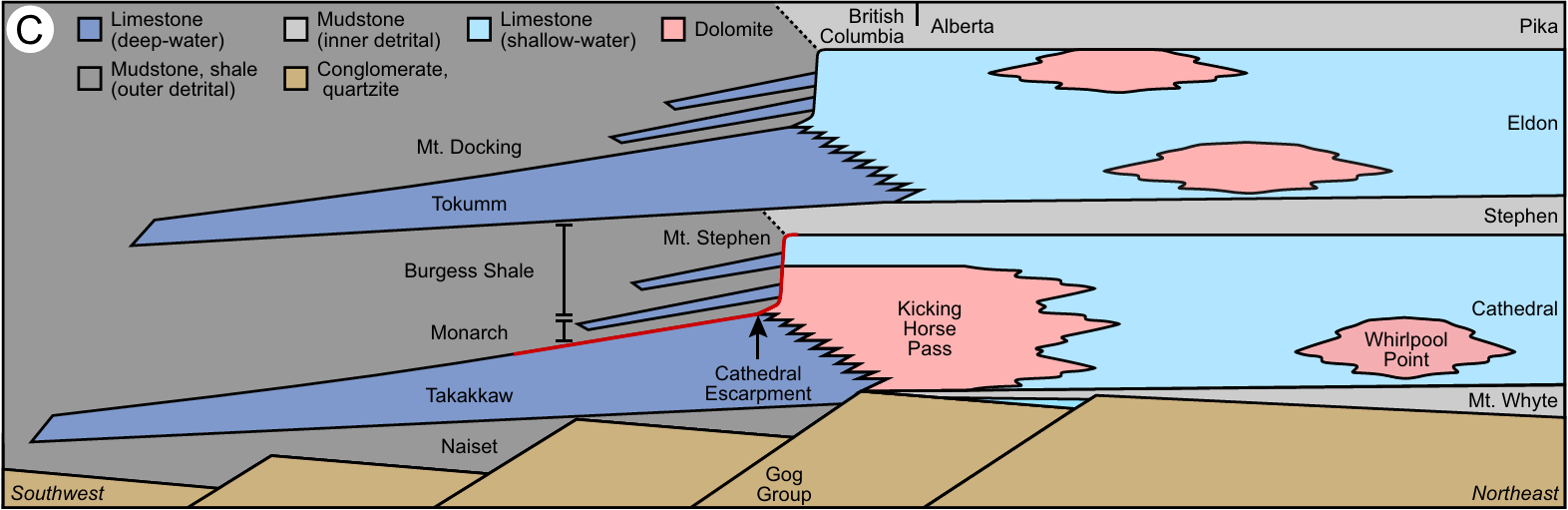
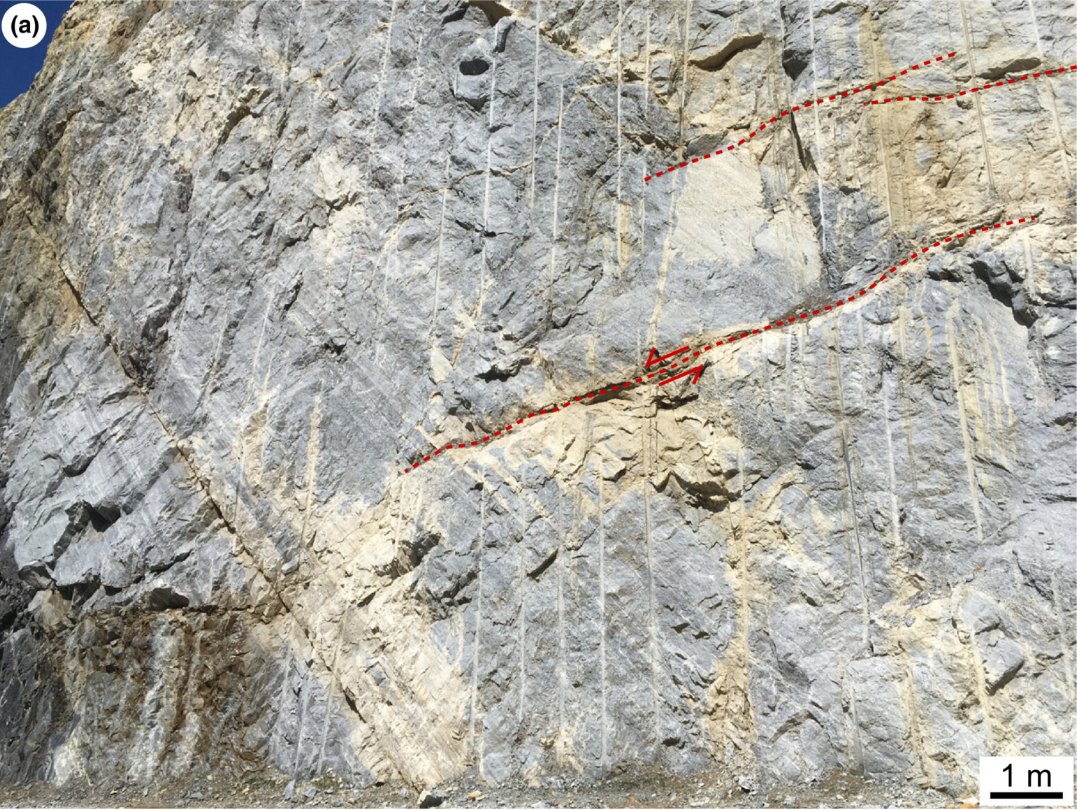
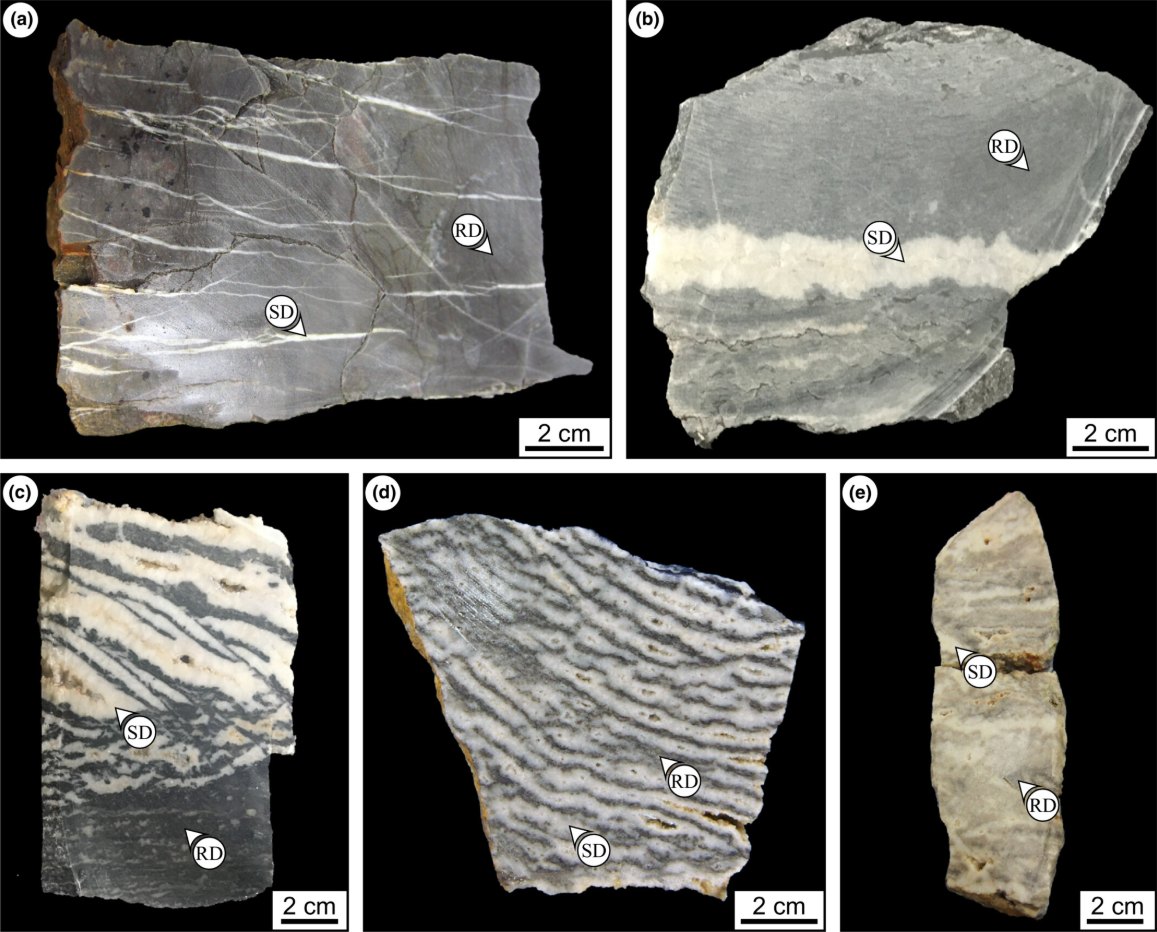
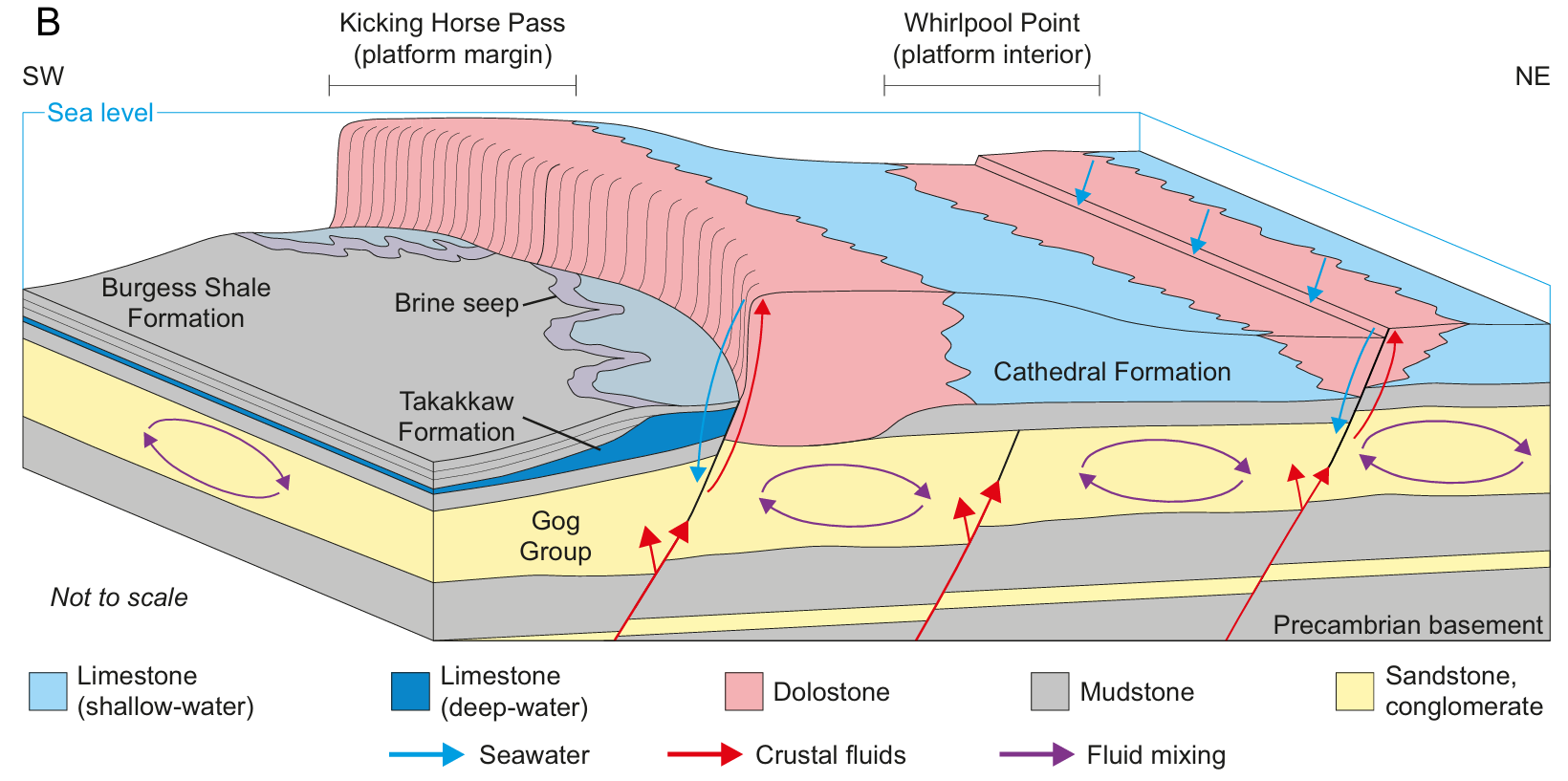
My Ph.D. research (The University of Manchester, with Cathy Hollis and Ernest Rutter) focused on fault-controlled hydrothermal dolomite bodies hosted in Middle Cambrian strata of the southern Rocky Mountains, western Canada. These dolomite bodies form where hot, mineral-rich fluids exploit deep fault systems, dissolving and replacing the surrounding limestone and precipitating the distinctive banded “zebra texture” that makes them so recognizable in outcrop and hand-specimen. Rather than studying this system with a single method, I built a four-part, complementary research program that moves from descriptions to mechanisms to timing:
- Imaging: Shortwave infrared hyperspectral imaging of outcrops to rapidly and non-destructively map multi-phase dolomitization, revealing textural and compositional zoning that was invisible to the naked eye.
- Mapping: Basin-scale structural-sedimentological analysis showing how the intensity and style of zebra-textures vary systematically with proximity to the controlling fault systems.
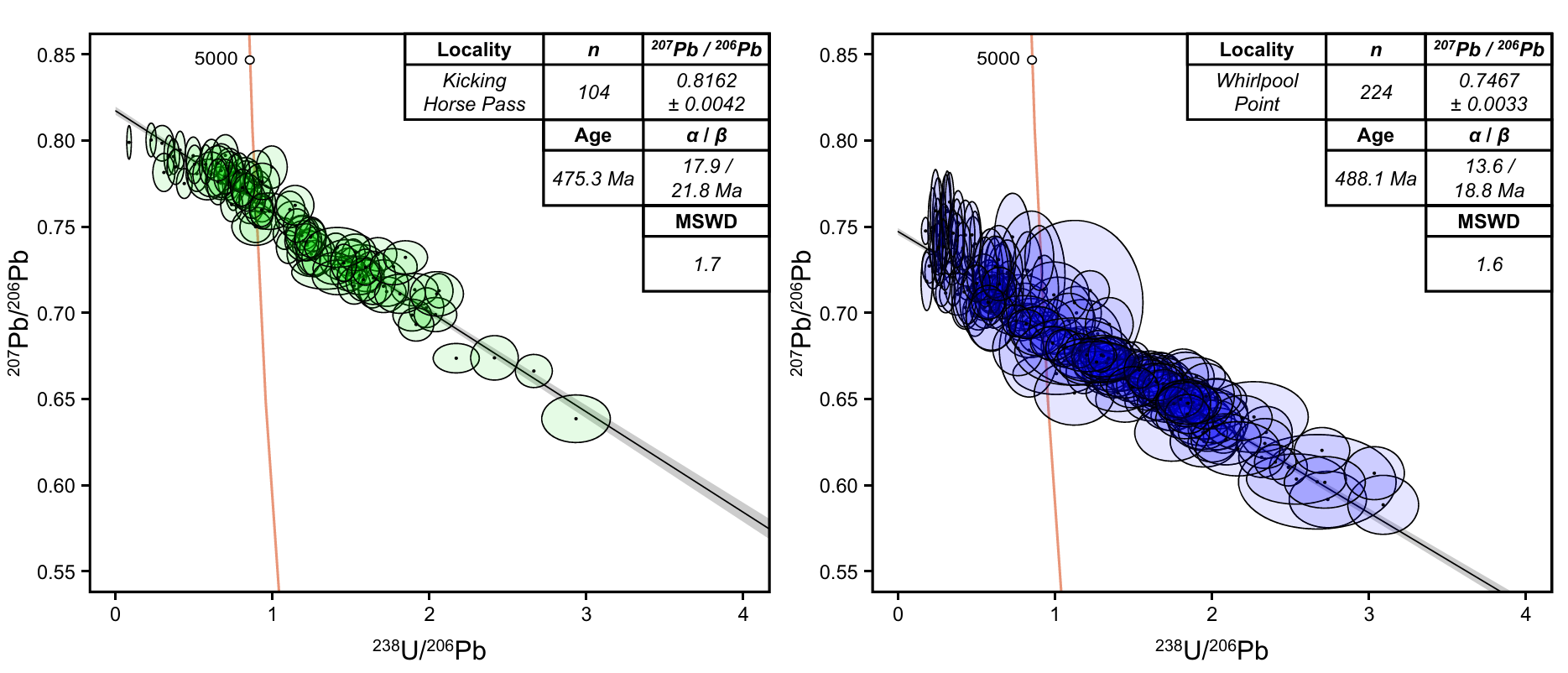
- Timing: Direct U–Pb geochronology of dolomite, showing that this hydrothermal fluid flow was coeval with deposition of the world-famous Burgess Shale lagerstätte, raising the possibility that hydrothermal brine seeps helped support the Cambrian ecosystems nearby.
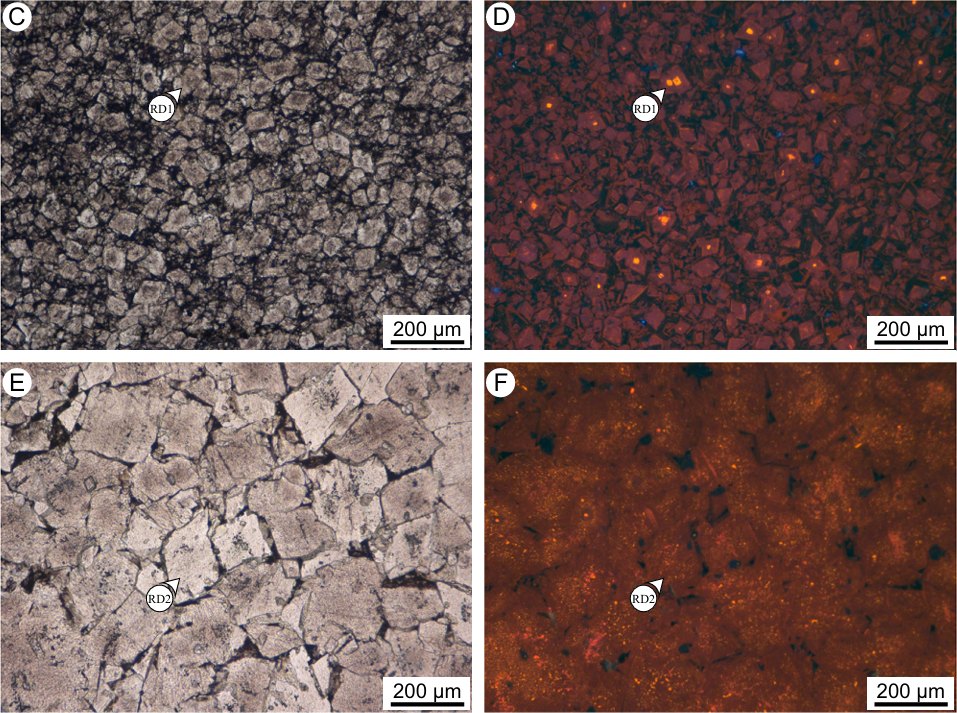
- Mechanism: Detailed petrographical and geochemical work resolving the coupled replacement–deformation–cementation processes that build zebra textures band by band.
Key Figures