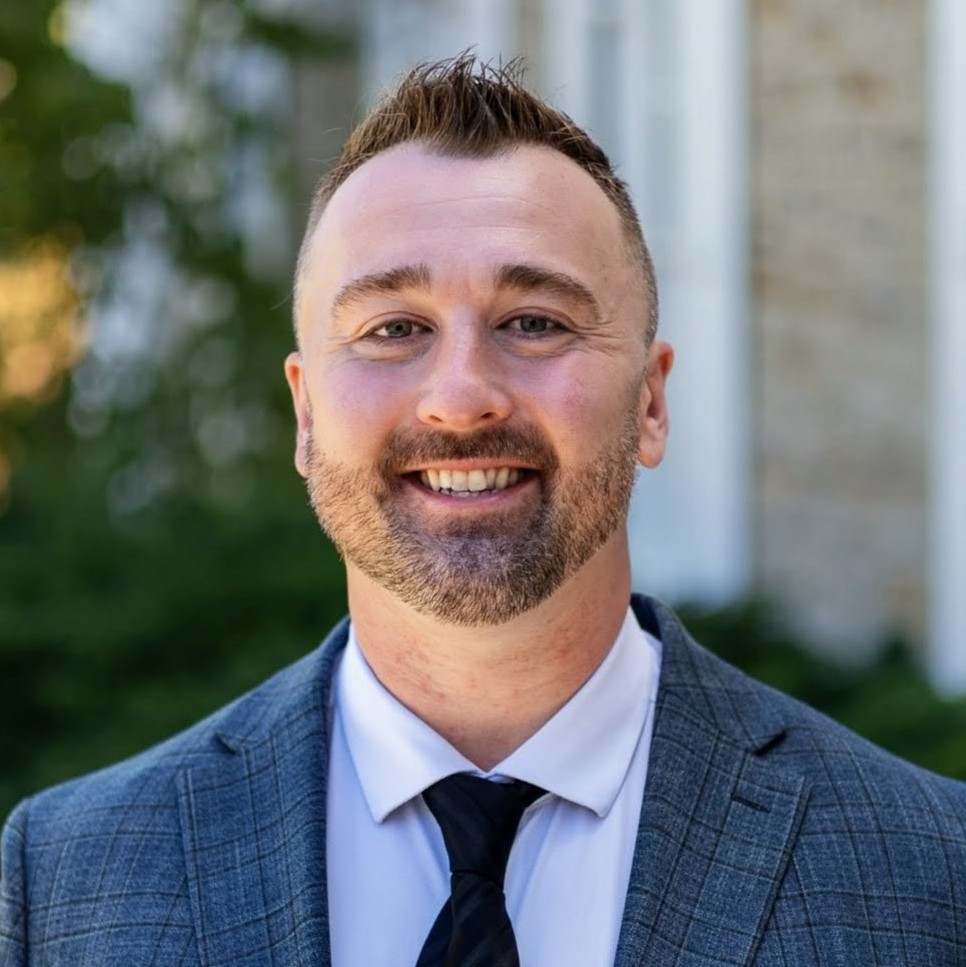
Cole A. McCormick, Ph.D.
About Me
Carbonate minerals are the primary archive of past ocean chemistry; they record temperatures, redox conditions, and the carbon cycle across billions of years of Earth history. However, that archive isn't passive — diagenetic fluids pass through carbonate rocks long after they form and can quietly overwrite the very signals we assume they preserve. My research asks a question that underpins a large part of paleoclimate/oceanography research: To what extent can we trust geochemical archives in ancient carbonate rocks, and under what conditions do they fail?
I answer that question through three complementary pillars: (1) Laboratory experiments that quantify how trace elements and isotopes behave in carbonate minerals; (2) Studies of early, low-temperature marine diagenesis that test whether the geochemical composition of seawater is faithfully preserved; and (3) Evaluations of burial diagenesis that track how that composition is modified as pore fluids evolve under elevated P/T conditions. Together, these approaches demonstrate how the geochemical signature of carbonate minerals can reveal the evolution of seawater at Earth's surface and how that signal is modified upon burial in sedimentary basins, bolstering our understanding of how carbonate rocks track syn- and post-depositional processes. That combination has already overturned some working assumptions: Even young, texturally pristine dolomite that formed at true seawater temperatures can retain an unaltered cerium anomaly (Ce/Ce*) while its δ238U signal has been completely overprinted.
I'm an Assistant Professor in the Department of Physical and Environmental Sciences at Texas A&M University-Corpus Christi, following a Ph.D. at the University of Manchester and an M.Sc./B.Sc. at the University of Alberta, where I've secured independent research funding at every career stage. My work bolsters our understanding of the carbonate rock record and the geochemical signals we pull from it, turning ancient limestones and dolostones into more reliable archives of Earth's past oceans. I mentor students through hands-on experimental, petrological, and geochemical research.
Research Interests
- Carbonate mineralogy, sedimentary petrology, and geochemistry
- Experimental precipitation and replacement of carbonate minerals
- Rare earth elements, δ34S, δ238U, clumped isotopes (Δ47/Δ48), and U–Pb geochronology
Education
- Ph.D., Earth & Environmental Sciences, The University of Manchester (2023)
- M.Sc., Earth & Atmospheric Sciences, University of Alberta (2019)
- B.Sc. (Honours), Geology, University of Alberta (2017)